
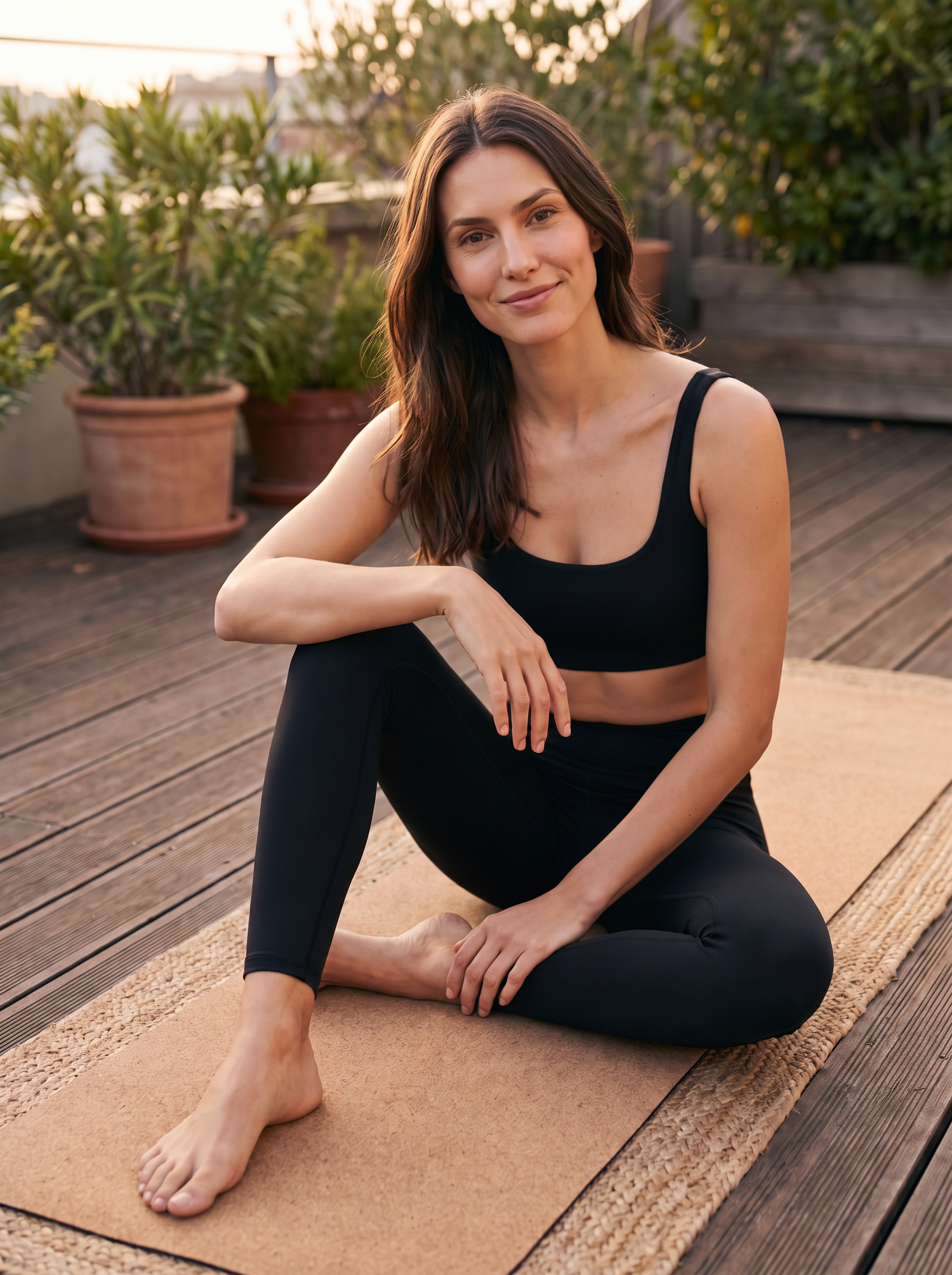

Second Skin: Why the Seams Are the Most Important Thing You Never Notice
“Seamless” is the word every activewear brand is reaching for this year. It sounds like softness, but it is really a claim about engineering — and most of the difference between a piece that vanishes against your skin and one that chafes, digs, and distracts is decided in a detail you were never meant to notice. This is a close look at the seam, and why it is where activewear quietly succeeds or fails.
01 — The Overlooked Detail
The Best Construction Is the Kind You Forget Is There
Think about the last time a piece of clothing annoyed you mid-movement. The waistband that rolled on the fifth rep. The bra band that left a red line by lunch. The legging seam that pressed into you through a long drive. You probably blamed the fit, or the size, or your body. Almost always, the real culprit was a seam — a raised ridge of thread and fabric sitting exactly where your skin needed to be left alone.
We notice clothing when it goes wrong. We never notice it when it goes right. A piece that fits and finishes well simply disappears — you move, and there is nothing to think about. That absence is not luck. It is the result of dozens of small decisions about where the fabric is joined, how those joins are pressed, and which of them can be removed altogether. The seam is the smallest unit of activewear engineering, and it carries far more of the experience than its size suggests.
This is why “seamless” has become the language of premium activewear in 2026. But the word has been stretched thin. Plenty of pieces marketed as seamless still carry a raised join right where it matters most. The honest version of the promise is not a marketing line — it is a set of construction choices you can actually feel. Understanding them is the difference between buying the word and buying the thing.
You never remember the seam that was done right. You never forget the one that was not.
02 — The Science
What a Seam Actually Does to Skin in Motion
Chafing is not a mystery and it is not a personal failing. It is friction. A raised seam is a ridge of thicker material standing proud of the fabric around it, and every time your body moves, that ridge drags across skin. Add the heat and moisture of a real workout — a humid Mumbai morning run, a heated Pilates class, a long ride — and the friction does its work faster. Repeated rub plus trapped sweat breaks down the skin’s surface, and that breakdown is what you feel as the raw, stinging line at the inner thigh, the underband, or the underarm.
Under load, a second problem appears: pressure. A central front seam on a legging concentrates fabric exactly where the body folds deepest in a squat or a forward bend, so it presses in and creates both a visible line and a real point of discomfort. A thick overlocked seam on a bra band turns the one part of the garment doing the most work into the one part cutting in hardest. The seam, in other words, tends to land in precisely the wrong place — the high-movement, high-pressure zones — unless someone deliberately designs it out.
That is the whole discipline of good construction: keep the joins away from where the body moves most, press the ones that remain until they lie completely flat, and remove the worst offenders entirely. Done well, the fabric stops being something you wear and starts behaving like a second skin — it moves when you move, and it has nothing standing between it and you.
The RYZ Test
Before you trust a piece for a long session, turn it inside out and run a finger along the inner thigh, the waistband, and the bra band. If you can feel a hard ridge in any of those three places, your skin will feel it too — just slower, and with sweat. Smooth, flat, or absent seams in those zones are the single most reliable sign that a piece was built to be worn hard, not just photographed well.
03 — The Vocabulary
The Four Words Worth Knowing Before You Buy
You do not need to be a garment technician to shop well. You need four ideas, because they are the ones that decide how a piece feels against your skin after the first ten minutes.
Flatlock
A seam construction where two edges are joined and then pressed so the join lies completely flush with the fabric, instead of standing up as a ridge. It is the workhorse of chafe-free activewear: it keeps the strength of a real seam while removing the height that causes rub. When you see flat, ladder-like stitching on the inside of a good legging, that is flatlock doing its job.
Stitchless / Bonded
Construction that joins fabric with heat and pressure rather than thread, leaving no raised stitch line at all. It gives the smoothest possible finish, which is why it belongs on the parts of a garment that press hardest against skin — a bra band, an underarm. RYZ builds its Swoosh sports bras with a stitchless design for exactly this reason: the band that carries the support is also the band that has to disappear.
No Front Seam
The deliberate removal of the central seam that usually runs up the front of a legging. That single seam is responsible for most of what women dislike about leggings under load — the pressure through a deep squat, the visible line, the cameltoe effect. Take it out and the front becomes one clean, sculpting surface. This is the construction behind the RYZ Core Sculpt Fit leggings, and it is the clearest example of engineering you feel rather than see.
Recovery
Not a seam, but the property that makes seamless construction hold up. Recovery is a fabric’s ability to return to its exact shape after being stretched, worn, and washed. A smooth seam on a fabric that bags out is a short-lived luxury; the finish only lasts if the material snaps back. Softretch, the proprietary blend RYZ builds in, is engineered to balance softness, stretch, and recovery so that the clean line you feel on day one is the line you feel on day one hundred.

The Swoosh Sports Bra Vest — a stitchless band, because the part carrying the support is the part that has to disappear against skin.
04 — The Reference
Which Seam Belongs Where
Not every join needs to disappear — a shoulder seam sits still and does no harm. The craft is knowing which zones demand which finish. This is the map RYZ designs to.
| Zone | The Risk | The Right Finish |
|---|---|---|
| Legging front / crotch | Pressure and visible line under a deep squat | No front seam — removed entirely |
| Inner thigh | Chafe from repeated stride friction | Flatlock, placed off the rub line |
| Bra band & underarm | Digging, red lines, rub under support | Stitchless / bonded for a flush band |
| Waistband | Roll-down and pinch through long sitting | High-waist, wide, seam-free face in a recovery fabric |
| Shoulder / side panel | Low — little movement, little pressure | A clean standard seam is perfectly fine |
The point of the map is restraint. Seamless is not about erasing every join for its own sake — it is about spending the engineering exactly where the body will feel it, and leaving the rest alone. That judgement is what separates a piece built to be worn from a piece built to be advertised.
05 — The RYZ Approach
Engineering You Feel, Not Branding You See
RYZ treats the seam as a design decision rather than an afterthought, because it is the place where the promise of premium activewear is either kept or broken. The Core Sculpt Fit leggings are built with no front seam and a high-waist sculpting face, so the front reads as one clean, uninterrupted line through every bend. The Swoosh sports bras use a stitchless band so the support sits flush and never leaves its mark. And every piece is cut in Softretch®, the recovery fabric that lets a smooth finish survive the wash cycle it was made for.
This is the quiet-luxury idea made physical. A logo tells you what you are wearing; a seam tells you how well it was made. The luxury RYZ is interested in is the kind you experience privately — the run where nothing rubbed, the class where nothing dug in, the long day where you simply forgot what you had on. It does not announce itself. It just holds.
Built to disappear.
No front seam. Stitchless support. A recovery fabric that holds its line. Softretch® activewear engineered to feel like nothing at all.
Frequently Asked
What does seamless activewear actually mean?
Truly seamless activewear is knitted in the round so there are few or no stitched joins where fabric panels meet, and any joins that remain are flatlocked or bonded rather than raised. In practice the word is used loosely, so the more useful question is where the seams sit and how they are finished. A piece with a smooth, no-front-seam waist and flat, chafe-free joins will feel seamless against the skin even if it is not knitted entirely in one piece.
Why do seams cause chafing?
A raised seam is a ridge of thicker material that sits proud of the fabric around it. When your body moves, that ridge rubs repeatedly against skin, and over a long run, ride, or lifting session the friction and trapped moisture break down the skin barrier, which is what chafing is. Placing seams away from high-movement zones, flatlocking them so they lie flush, or removing them altogether is how good construction prevents it.
What is a no-front-seam legging and why does it matter?
A no-front-seam legging is built without the central seam that usually runs up the front of the crotch and waist. That seam is the one that creates pressure, visible lines, and the cameltoe effect, so removing it gives a cleaner line and a more comfortable fit through deep bends, squats, and long sitting. RYZ builds its Core Sculpt Fit leggings with no front seam in Softretch® fabric for exactly this reason.
Is stitchless or flatlock construction better for a sports bra?
Both are far better than a standard overlocked seam for a bra, because the band and straps are where friction and pressure concentrate. Stitchless or bonded construction removes the ridge entirely for the smoothest finish, while flatlock keeps a join but presses it flat so it will not dig. For high-support and longer sessions, look for a smooth, stitch-free band like the one RYZ uses on its Swoosh sports bras, which is engineered to sit flush and prevent rub.
Continue Reading
The finest detail in a piece of activewear is the one you were never meant to feel. Get the seam right, and everything else is free to simply move.



Leave a comment
This site is protected by hCaptcha and the hCaptcha Privacy Policy and Terms of Service apply.